 Southeastern
Divers, Inc.
Southeastern
Divers, Inc.2720 Governors Drive SW, Huntsville Alabama 35805 - Phone: 256-536-8404
"Training the best divers in North Alabama since 1980."
|
2720 Governors Drive SW, Huntsville Alabama 35805 - Phone: 256-536-8404
"Training the best divers in North Alabama since 1980." |
|
|
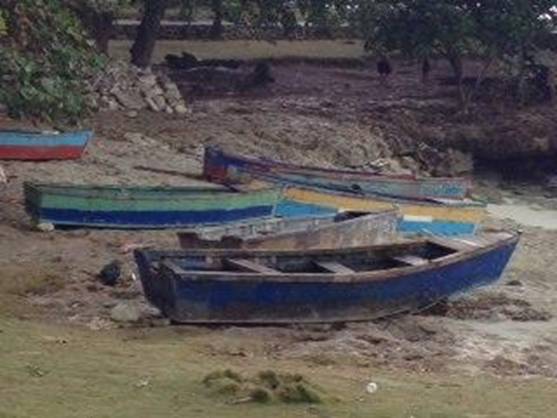
New Courses! Yawn! Stretch! Time to come out of hibernation and start diving! I didn’t get much sleep this winter because I was busy getting some new courses ready for you. Southeastern Divers is unique among dive shops because in addition to the usual courses, we have some courses that are taught nowhere else, or at least in very few dive shops. PADI has a great program for instructors which lets us invent courses where we see a need or an interest. Lots of folks have asked me how to get started in technical diving, and my advice has always been to get some tech gear, learn to establish horizontal trim, and practice. Without some formal training, it’s tough to move from recreational diving techniques to technical diving techniques. Seeing this need, Peter Rothschild and I worked to produce the Tecreational Diver Distinctive Specialty Course. This course is a formal exploration of stuff you need to know if you’re going to be a technical diver. Until now, the only way to learn these things was to hang around with tech divers and hope they’d have the time to show you a thing or two. It’s a long, drawn-out process, let me tell you, because that’s exactly how I came up in the technical diving world. I asked questions of everyone I could talk to. I got some great answers, and some pure garbage, and it took a while to figure out which is which. Here’s what the Tecreational course will cover: · Choosing gear that is appropriate for the TecReational Dive – regulators, tanks, BCDs, fins, lights and exposure protection; · Fundamental Technical diving skills that will enhance the safety and fun of the Recreational dive – such basic skills as mask clearing and S-drills done mid-water and while maintaining position and non-silting kicks such as the Frog Kick, Modified Flutter Kick, Helicopter Turn and Backwards Kick; · Situational Awareness of the Divers and the creation of a Team Diving Attitude; · Basic concepts of Gas Management – Calculating Minimum Safe Gas Reserves for any dive; Strategies for using the available gas supply depending on the nature of the dive; and Calculating the gas needs for the dive as a standard part of the pre-dive planning. · Decompression Models which will allow the student to better understand inert gas loading and DCS Whether you choose to go into technical diving by taking Tec 40 classes and beyond, there are valuable skills and knowledge to be gleaned from the Tecreational Specialty. Who doesn’t want to dive in a way that’s better for the environment, safer due to redundant equipment, gas planning and an understanding of how decompression models work? If you’ve run into me at SDI anytime lately and asked about my recent dives, no doubt I’ve told you about diving in the caverns in Florida. From Marianna to High Springs, Florida is a Mecca for cave and cavern divers all over the world. The water is a pretty consistent 60 – 70f, and usually it’s crystal clear. Visibility in excess of 100’ is not unusual. I’ve learned to cavern and cave dive safely, with the right gear and techniques, and now I’m ready to teach you. In the PADI Cavern Diver Course, you’ll learn to use a guideline, how to choose the proper gear for cavern diving, how to handle situations of diminished visibility, and how to be a buddy for a fellow Cavern Diver. It’s a great course and the skills you learn in it will carry over to diving in non-overhead environments as well. Trimix, anyone? I have been working on getting my Trimix Diver Instructor rating so I can teach the Trimix Diver Course for over two years. Trimix, a breathing gas with helium, oxygen, and nitrogen is the gas of choice for dives beyond the Tec 50 limit of 165’. Substituting helium for some of the oxygen and nitrogen reduces the narcotic effects of those gasses and may help decompression, though this point is a hot topic for debate among tech divers. It took most of two years to do the qualifying dives. They had to be deep, all deeper than 130’ and many deeper than 200’, and they had to be on trimix. I finished my qualifying dives on The Windjammer, in Bonaire back in 2011. Between November 2011 and January 2013, there was a constant string of weather blowouts and schedule mishaps that kept the course from happening. It finally did happen this past February (2013) in the Dominican Republic. The diving was as much an adventure as I’ve ever had above or below the water. Just to give you an idea, here’s a picture of the boat we used. Captain Tito drove the outboard motor with his left hand and bailed continuously with his right. For the three hours we were out each day, he never stopped.
By the time I got to the Dominican Republic, I had already done a couple of the training dives in Florida, so we had to do dives to 100’, 180’, 220’, and 250’, more or less. Because we were diving in a location none of us had ever dived before, we had to count on Captain Tito to put us over deep enough water. He’s not a diver, but somehow he knew. He was able to tell us how to navigate to deep water from each mooring we tied to. Our dives went without mishap, but on the surface, we had some adventure. My Instructor Trainer, Jeff Loflin, got sick and was having some extreme gastric distress during the dives. I had a high-pressure seat go out on one of my regulators, which made the low-pressure inflator hose blow in half. Luckily, there was a spare regulator on the boat. Without it, we’d have had to go an hour back to shore for a replacement. Now that I’ve had my big adventure, and gotten my Trimix Instructor certification, I’m ready to train up some dive buddies. Let’s get together and have a Trimix Diver course! There’s lots of other courses available during the 2013 dive season as well. Join me for an Advanced Open Water Course, a Rescue Course, or maybe some specialty courses. We’re going to have Deep Diver, Search & Recovery Diver, Sidemount Diver and lots more this year! Come join the fun!
See y’all in the H2O! max
|
|
Best viewed with 1024 x 768 screen resolution. This page was last updated on 08/12/2014. Copyright © 2008 by Southeastern Divers, Inc. - No part of this website may be reproduced or copied in any manner without the express written permission of Southeastern Divers, Inc. |