 Southeastern
Divers, Inc.
Southeastern
Divers, Inc.2720 Governors Drive SW, Huntsville Alabama 35805 - Phone: 256-536-8404
"Training the best divers in North Alabama since 1980."
|
2720 Governors Drive SW, Huntsville Alabama 35805 - Phone: 256-536-8404
"Training the best divers in North Alabama since 1980." |
|
|
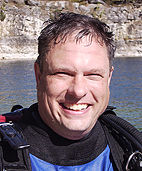
Max Gilbert PADI IDC Staff Instructor New Diver? . . . Now what?? You got certified to dive, right? That C-Card you worked so hard for isn’t doing you any good just sitting in your pocket. Guess what? We want you to dive too! We here at SDI want you to be an active part of our circle of dive buddies, so we can look at your pictures, and hear your dive stories. Lots of newly-certified divers enjoy doing a few instructor-led dives after their Open Water class, so why not take the next step and earn your Advanced Open Water Certification? The Advanced Open Water course is about DIVING, not sitting in a classroom, and we won’t have to spend any time in a pool. Other than doing some Knowledge Reviews in the Adventures in Diving Manual, we’re going to be diving, diving, diving, diving, diving. That’s FIVE dives in one course. Actually, the Advanced Open Water course has more dives in it that any other PADI course, except for ONE of the Tec courses. Talk about bang for your buck! When choosing the dives for your AOW experience you get to pick three, and PADI picks two. The two PADI picks for you are Deep and Underwater Navigation. Once you’re done with your Advanced Open Water Diver course, you’ll be certified to dive as deep as 100’, so the Deep Dive is a must. Over the years, we’ve found that getting lost causes a lot of diver anxiety, so PADI made the Underwater Navigation dive a must as well. What about the other three dives? There’s a lot to choose from… Night Dive, Underwater Photography, Underwater Videographer, Diver Propulsion Vehicle, Dry Suit, Drift, Boat, Peak Performance Buoyancy, Wreck, Search & Recovery, and on and on. For a complete list, take a look at the Adventures in Diving Manual. Which dives you do are up to you, but I always try to include Peak Performance Buoyancy, Wreck, and Search and Recovery because they seem to be the ones that people enjoy the most, or find the most useful. Being proficient at underwater navigation is a real confidence-booster. Knowing you can find your way back to your entry point, whether it’s a shore location, a dock, or a boat allows you to relax and enjoy the dive. Unfortunately, GPS doesn’t work underwater, so we have to come up with something else. There are some sonic “homing beacon” solutions out there, but they are pretty expensive, and mostly unnecessary. I like to use a plain old compass, and I count my kick cycles to measure distance. It’s all you really need to get where you’re going, and more importantly to get back again! As an Open Water diver, you were asked to observe a depth limit of 60’. You can dive your whole life exploring shallower reefs and wrecks within this limit, but it’s human nature to expand our limits continuously. It’s why we race cars, climb mountains, or jump out of airplanes. We all want to see what we’re capable of, I suppose. The Deep Dive in the AOW course is the beginning of that exploration underwater. On this dive, we’ll take you deep enough (below 60’ for sure!) to experience the effects of narcosis. What you’ll find is that narcosis is a very subtle phenomenon, it increases gradually, and you don’t really notice it until you try to do something that requires a bit of thought. At that point, you’ll realize that your noodle isn’t what it was on the surface. It’s for this reason the Open Water Diver depth limit is 60’, and it’s also the reason you should make your first deep dive with an instructor. You’ll go to depth, perform some simple brain tricks, explore briefly and then return gradually to the surface, making a safety stop along the way. Peak Performance Buoyancy builds on the things you learned in your Open Water class to give you a set of tools that you can then use on every dive to get better and better buoyancy control. I think of buoyancy control as a pyramid. The base of the pyramid is having the right amount of lead – and I’ll bet you are using too much. Most divers never re-evaluate the amount of weight they need after they finish Open Water training, but the real truth is that as you dive more, you can dive with less lead. I’m on the roly-poly side myself, but I can easily sink myself in a 5 mil suit with eight pounds of lead. It’s not magic, it’s practice. The second level of the pyramid is having the lead in the right places to get your position in the water correct. Ideally, a diver is horizontal when moving through the water, and should stay that way when hovering. When properly trimmed, all of the diver’s energy is focused on moving forward, and little or none is used to maintain position. The third level of the pyramid is the amount of air you have in your BCD. With the right amount of lead, the air you need in the BCB bladder should be close to none. The pinnacle of the pyramid is breath control, which is where the magic happens. Want to go up a tad? Breathe in a little more deeply, want to sink a tad? Exhale a little more fully. Now, I can’t promise you’ll have perfect buoyancy control after one Peak Performance Buoyancy Dive, but you’ll be on your way to having the tools you need to get there. Wrecks are huge fun to dive on. There’s something about exploring an object on the sea floor that’s not supposed to be there that mesmerizes me. Even if the wreck was sunk especially for divers, I like to imagine that the ship went down in a huge storm (of course the crew escaped in lifeboats), and settled down to the bottom for me to explore. It’s my way of reminding myself just how powerful the ocean is, and that even though I’ve got lots of dive training and experience, the ocean is still the boss. I’ve dived The USS Oriskany a couple of times, the Hilma Hooker dozens of times, but my favorite wreck dive has to be the U-352 off the coast of North Carolina. She was sunk by the US Coast Guard during World War II, after the crew was forced to abandon her. She doesn’t look like much on the bottom – more like a big garden slug than anything else, but being able to lay hands on such a cool piece of history is a tremendous thrill! I’m still looking for that treasure chest sitting on the ocean floor. You know the one, full of Spanish Doubloons, Pieces of Eight, and maybe some diamonds, emeralds and pearls. Everything shiny underwater catches my eye. I haven’t found treasure, but I have found a couple of masks, a few snorkels, a weight belt, and a fin or two. When I finally do find that treasure chest, I’ll know what to do because of the skills I learned on the Search & Recovery dive. On this dive, you’ll learn some useful search patterns, rigging techniques, and lift bag use. These skills are pretty handy to have, because you never know when you’ll get to make someone’s day by finding a lost pair of sunglasses or something bigger. If you choose to advance your dive education beyond Advanced Open Water, each of the dives you do in the course count towards a specialty course. The Peak Performance Buoyancy dive counts as one of the dives in the Peak Performance Buoyancy course, the Deep dive counts towards the Deep Diver course, and so on. Also, after your AOW course, you’ll be ready for what I think is the most important course for anyone, Rescue Diver. I’ve already written an article about that course, so I’ll be brief here. The Rescue Diver course is a fantastic experience. You’ll gain more confidence from that course than any other, regardless of your dive experience. Whether it’s been a while since you last dived, or whether you certified recently, check out our calendar and jump in the water for your Advanced Open Water training! See you soon ~ underwater! max
See you soon ~ underwater, but you won’t need me… you’ll be Self-Reliant! max
|
|
Best viewed with 1024 x 768 screen resolution. This page was last updated on 08/12/2014. Copyright © 2008 by Southeastern Divers, Inc. - No part of this website may be reproduced or copied in any manner without the express written permission of Southeastern Divers, Inc. |